 (208) 991-3502
 Meridian, ID






 January 14, 2026
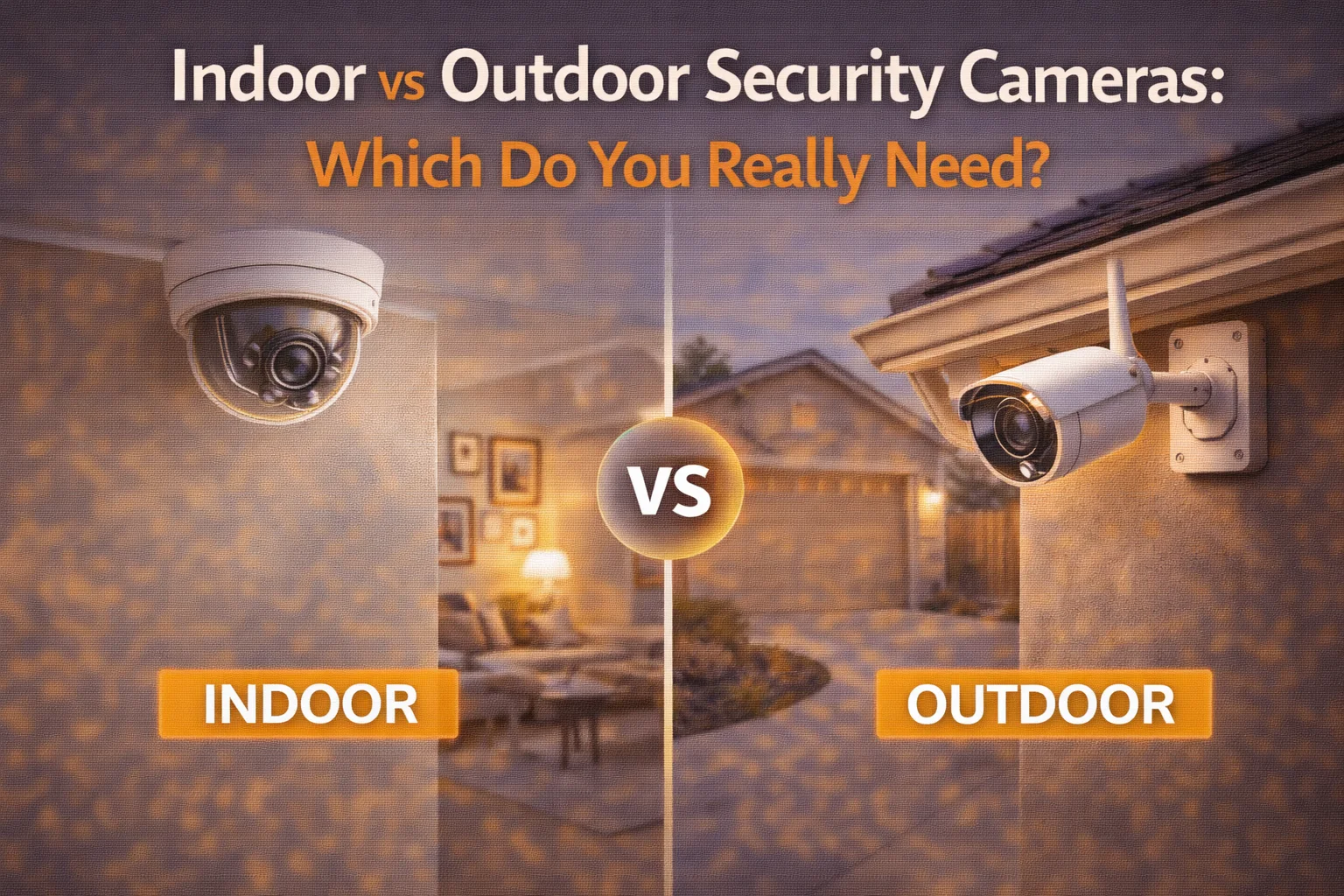
Not all security cameras are meant for the same job. This guide explains the differences between indoor and outdoor security cameras and helps Treasure Valley homeowners choose the right coverage.
Security cameras are one of the most effective tools for home awareness—but not all cameras are designed for the same environments. One of the most common questions Treasure Valley homeowners ask is whether they need indoor cameras, outdoor cameras, or both.
The answer depends on how the home is used, where activity occurs, and what level of visibility is actually needed. Understanding the differences between indoor and outdoor cameras helps homeowners build a system that’s effective without being excessive.
What Outdoor Security Cameras Are Designed For
Outdoor security cameras are built to monitor what happens around the home.
They are designed to:
Withstand weather and temperature changes
Monitor entry points and approach paths
Capture activity before someone reaches the home
Common outdoor camera locations include:
Front doors
Driveways
Side yards
Backyards
Garage exteriors
For most Treasure Valley homes, outdoor cameras form the first line of awareness, identifying activity before it becomes a problem.
Many homeowners begin planning exterior coverage while researching broader technology solutions available through
👉 https://treasurevalleysolutions.com/services/
Strengths of Outdoor Cameras
Outdoor cameras excel at:
Deterring unwanted activity
Monitoring deliveries and visitors
Capturing approach paths
Providing night visibility with proper lighting
Visible outdoor cameras also play a strong role in crime deterrence, especially when placed near primary entry points.
Because most activity happens outside first, outdoor cameras often provide the biggest return on investment.
What Indoor Security Cameras Are Best Used For
Indoor cameras are designed for situational awareness inside the home, not constant surveillance.
They’re commonly used to:
Monitor entryways from inside
Observe common areas when homes are vacant
Check activity during travel
Confirm alerts from exterior sensors
Indoor cameras are most effective when used selectively and intentionally—not everywhere.
Privacy Considerations With Indoor Cameras
Privacy is the biggest difference between indoor and outdoor cameras.
Indoor cameras should:
Never be placed in bedrooms or bathrooms
Be limited to common areas
Be positioned with clear purpose
Many homeowners choose to disable indoor cameras when home and enable them only when away. Professional planning ensures cameras support security without making the home feel intrusive.
Do You Need Both Indoor and Outdoor Cameras?
In many cases, yes—but not always.
Outdoor cameras are usually the priority. They monitor activity before entry and provide deterrence.
Indoor cameras are most useful when:
Homes are frequently vacant
There are multiple entry points
Owners travel often
Additional verification is desired
Rather than choosing one or the other, many homeowners use a layered approach—outdoor cameras for deterrence and awareness, indoor cameras for confirmation when needed.
This layered strategy is often discussed as part of broader planning outlined within
👉 https://treasurevalleysolutions.com/solutions/homeowner-solutions/
Common Mistakes Homeowners Make
Some of the most common camera planning mistakes include:
Installing too many indoor cameras
Overlooking side yards or back doors
Relying on one camera for wide coverage
Choosing indoor cameras for outdoor use
Each camera type is designed for a specific purpose. Using the right tool in the right place matters more than camera count.
Professional Planning Makes the Difference
Choosing between indoor and outdoor cameras isn’t just about equipment—it’s about strategy.
Professional planning ensures:
Cameras are placed where they matter
Privacy is respected
Coverage is balanced
Systems remain easy to use
Poorly planned systems often feel overwhelming or underperform, even with good equipment.
Frequently Asked Questions
Are outdoor cameras enough for most homes?
Yes. Outdoor cameras provide the most coverage and deterrence for most Treasure Valley homes.
Should indoor cameras always be on?
No. Many homeowners use indoor cameras only when away.
Can outdoor cameras be used indoors?
They can, but they’re often unnecessary and more expensive than needed.
Do indoor cameras increase security?
They add confirmation and awareness but shouldn’t replace exterior coverage.
Is professional installation recommended?
Yes. Placement and system design directly affect reliability and effectiveness.
Building the Right Camera Setup for Your Home
The goal of a security camera system isn’t to monitor everything—it’s to monitor what matters.
For Treasure Valley homeowners, outdoor cameras usually form the foundation of a strong system, while indoor cameras play a supporting role when used thoughtfully.
When cameras are chosen intentionally and installed correctly, security feels reassuring—not invasive—and provides the confidence homeowners are really looking for.